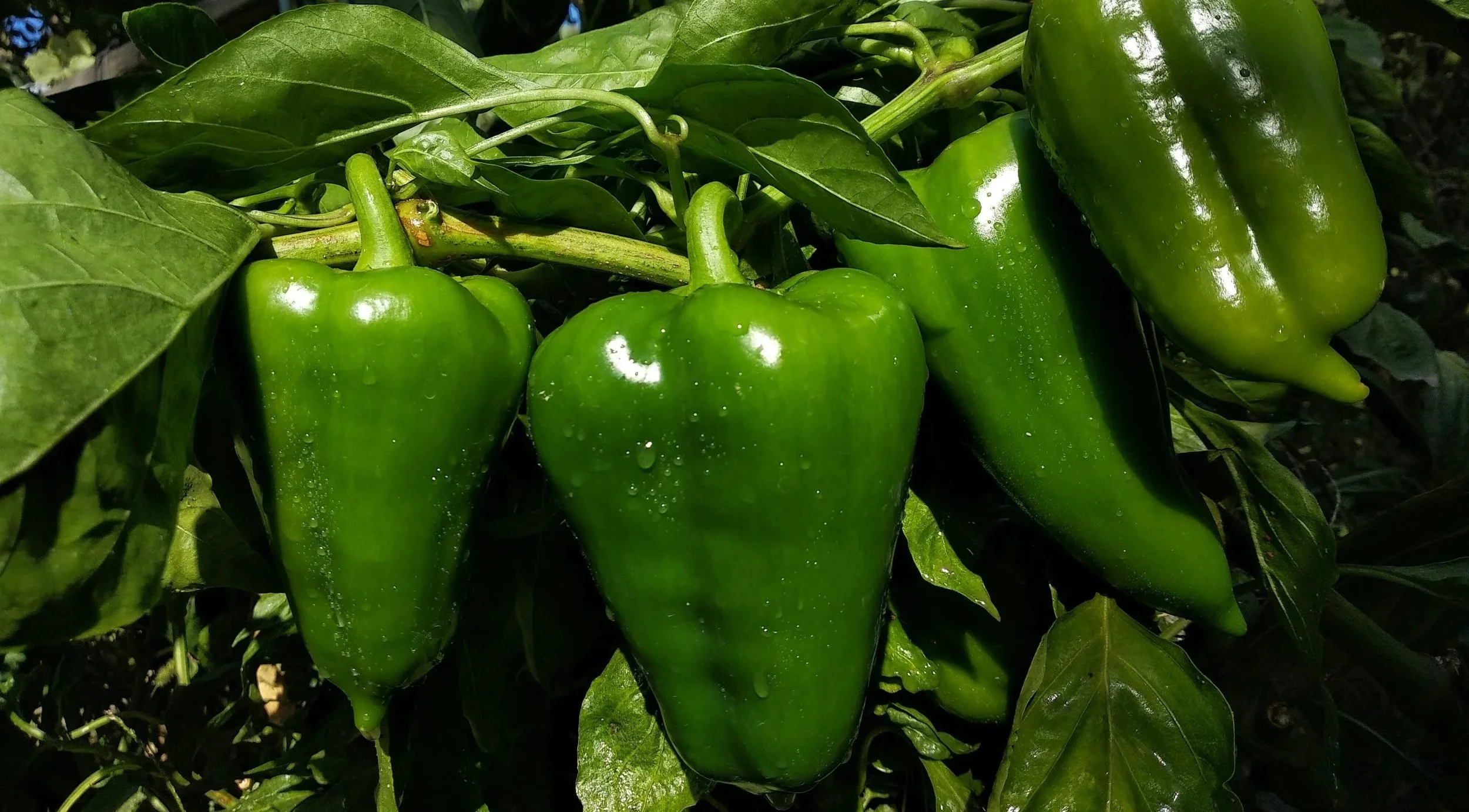
Some sweet, some spicy, all sunshine lovers.
Peppers bring color, flavor, and variety to the summer garden. Some are mild and sweet, while others deliver a fiery kick. Both types belong to the Capsicum family, and many familiar peppers are varieties of the same species.
Bell peppers, jalapeños, poblanos, banana peppers, and cayennes all have different flavors, shapes, and levels of heat. Their fruits begin green or another immature color, then often turn red, yellow, orange, or another color as they ripen.
At The Giving Garden, peppers give us another opportunity to provide fresh, versatile vegetables throughout the growing season.
Growing Peppers in North Texas
Peppers are warm-season vegetables. They need full sun, fertile, well-drained soil, and consistent moisture.
Start seeds indoors approximately 8–10 weeks before the expected spring transplanting date. Move plants outdoors after frost danger has passed and nighttime temperatures are reliably warm.
Space plants approximately 18–24 inches apart. Mulch helps conserve moisture, and stakes or small cages support branches carrying heavy fruit.
Although peppers enjoy warmth, extreme North Texas summer temperatures interfere with flowering and fruit set. Established plants often resume producing as temperatures moderate in early fall.
What to Notice
Sweet peppers
Bell peppers and many sweet banana peppers contain little or no capsaicin, the compound responsible for heat.
Hot peppers
Jalapeños, serranos, and cayennes contain varying amounts of capsaicin, producing their characteristic heat.
Watch the small white flowers develop into peppers. Notice how the fruit changes size and color as it matures. A pepper's color alone doesn't reliably tell you how hot it will be. Variety and growing conditions both influence pungency.
Harvesting
Harvest peppers when they reach the desired size and color for their variety.
Many peppers are edible while green, but allowing them to ripen fully often develops additional sweetness and flavor. Some hot peppers also become more pungent as they mature.
Use pruning shears or scissors to cut peppers from the plant, leaving a short piece of stem attached. Pulling fruit by hand risks breaking branches.
Refrigerate fresh peppers in a produce bag or container. For longer storage, peppers also freeze well after washing and chopping.
In the Kitchen
Sweet peppers are excellent raw in salads, roasted with other vegetables, stuffed, or sautéed with onions.
Hot peppers add flavor and heat to salsas, soups, sauces, and pickled vegetables.
When handling especially hot peppers, wear food-safe gloves and avoid touching your eyes. Removing the pale inner ribs and seeds reduces some of the heat, since much of the capsaicin is concentrated in the inner tissues.
Recipe: Easy Roasted Peppers and Onions
Ingredients:
3 sweet bell peppers, any color
1 medium onion
2 tablespoons olive oil
½ teaspoon garlic powder
Salt and pepper to taste
1 small jalapeño, optional
Instructions:
Preheat oven to 425°F.
Remove the pepper stems and seeds. Slice the peppers and onion into strips. For a spicy version, add a thinly sliced jalapeño.
Toss everything with olive oil, garlic powder, salt, and pepper.
Spread in a single layer on a baking sheet and roast for 20–25 minutes, stirring halfway through, until tender with lightly browned edges.
Serve with grilled chicken, tacos, rice bowls, sandwiches, or roasted vegetables.
Try This at Home
Grow one sweet pepper and one hot pepper side by side in large containers or a sunny garden bed.
Compare their flowers, fruit shapes, colors, and growth habits. Harvest some peppers while green and allow others to mature fully.
Notice how the flavor changes with ripeness. If tasting hot peppers, begin with a tiny amount and wash your hands after handling them.
The Giving Garden at Jacob's Reward Farm
Battling Hunger. Caring for Creation.