The hotter it gets, the happier it grows
Okra is one of the true champions of the Southern summer garden. While many vegetables struggle through the intense heat of North Texas, okra keeps growing, flowering, and producing tender green pods.
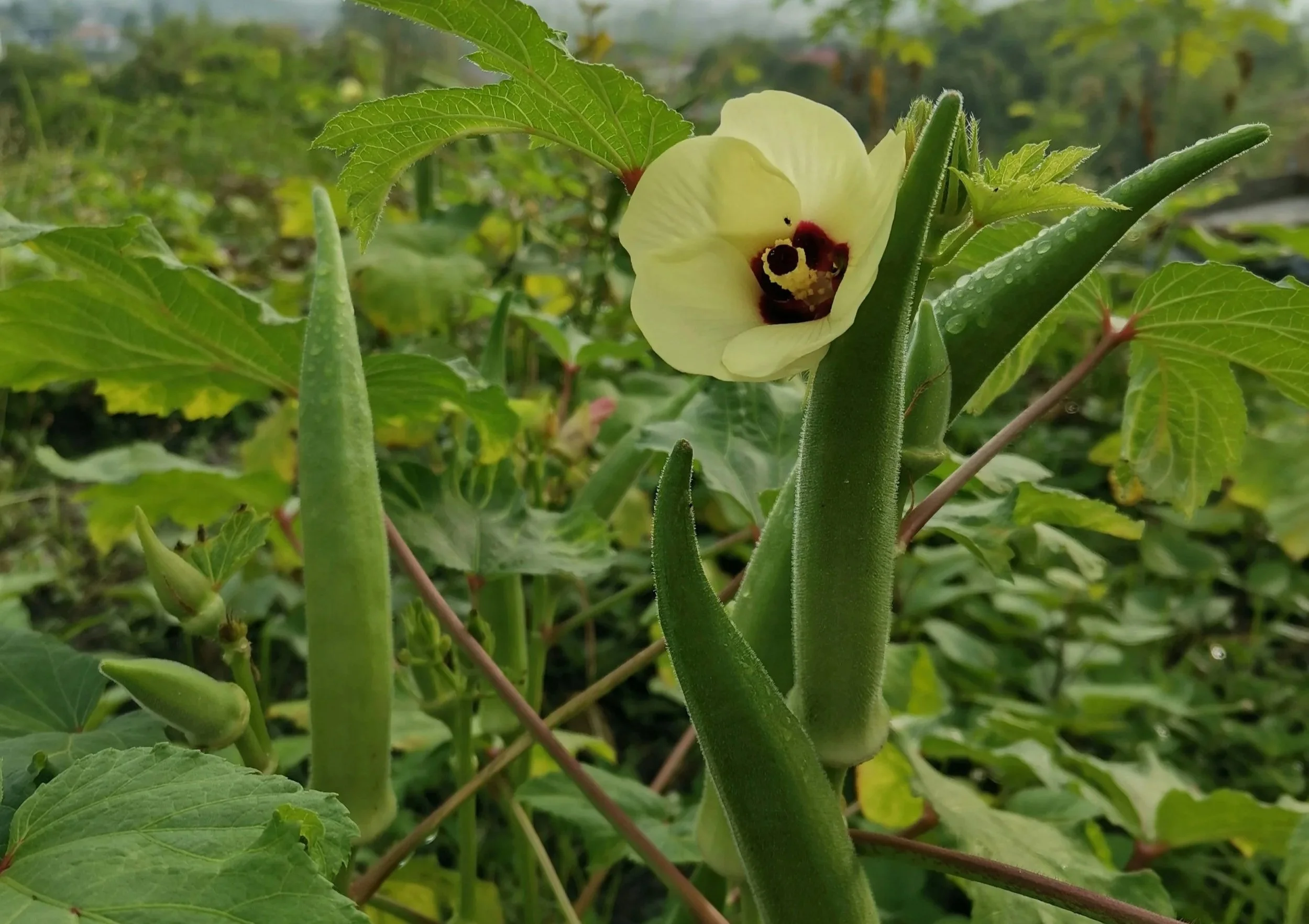
A member of the hibiscus family, okra produces beautiful flowers with pale yellow petals and deep burgundy centers. Those flowers eventually become the pods we harvest for eating.
Okra is especially valuable in a garden like The Giving Garden, where dependable production means more fresh vegetables for our neighbors.
Growing Okra in North Texas
Okra loves sunshine, heat, and warm soil. Plant seeds directly outdoors after the danger of frost has passed and the soil has warmed to at least 65–70°F, typically in late April or May.
Sow seeds about ½–1 inch deep, thinning seedlings to 12–18 inches apart. Some varieties grow more than six feet tall, so allow plenty of space.
Okra tolerates dry conditions once established, although consistent watering improves pod production. Avoid excessive nitrogen fertilizer, which encourages leafy growth rather than flowers and pods.
In North Texas, healthy plants often continue producing from early summer until the first fall frost.
What to Notice
Look closely at the flowers. Their resemblance to hibiscus is no coincidence. Both plants belong to the mallow family.
Watch how quickly the pods develop after flowering. During hot weather, an okra pod grows from tender and small to oversized and fibrous in only a few days.
Okra plants also have slightly prickly leaves and stems. Some gardeners prefer wearing gloves and long sleeves when harvesting.
Harvesting
Harvest okra when pods are young and tender, generally 2–4 inches long, depending on the variety.
During peak summer production, check plants every day or two. Use pruning shears or a sharp knife to cut pods from the stems rather than pulling them off.
Pods left on the plant too long become tough and woody. Regular harvesting encourages continued production.
Refrigerate unwashed okra in a breathable bag or container and use within a few days for the best quality.
In the Kitchen
Okra is delicious roasted, grilled, sautéed, fried, or simmered in soups and stews.
Its natural thickening properties make okra a traditional ingredient in gumbo. For those who prefer a less slippery texture, roasting or cooking over high heat works well.
Young pods are also excellent pickled.
Recipe: Easy Oven-Roasted Okra
Ingredients:
1 pound fresh okra
1½ tablespoons olive oil
½ teaspoon garlic powder
½ teaspoon smoked paprika
Salt and pepper to taste
Instructions:
Preheat oven to 425°F.
Wash the okra and dry thoroughly. Trim the stem ends without cutting deeply into the pods. Leave small pods whole and slice larger ones lengthwise.
Toss with olive oil, garlic powder, smoked paprika, salt, and pepper.
Spread in a single layer on a baking sheet. Roast for 15–20 minutes, turning once, until tender with lightly browned edges.
Serve immediately.
Try This at Home
Plant two or three okra seeds in a sunny garden bed after the soil warms in spring.
Once the plants begin flowering, check them every morning. Watch how quickly each flower develops into a pod, and keep a record of how many pods one plant produces over the season.
For a fun experiment, leave one pod on the plant until completely mature and dry. Open the pod to discover the seeds inside, and save seeds from a healthy, open-pollinated variety for next year's garden.
The Giving Garden at Jacob's Reward Farm
Battling Hunger. Caring for Creation.