Big leaves, big flavor, and a long harvest
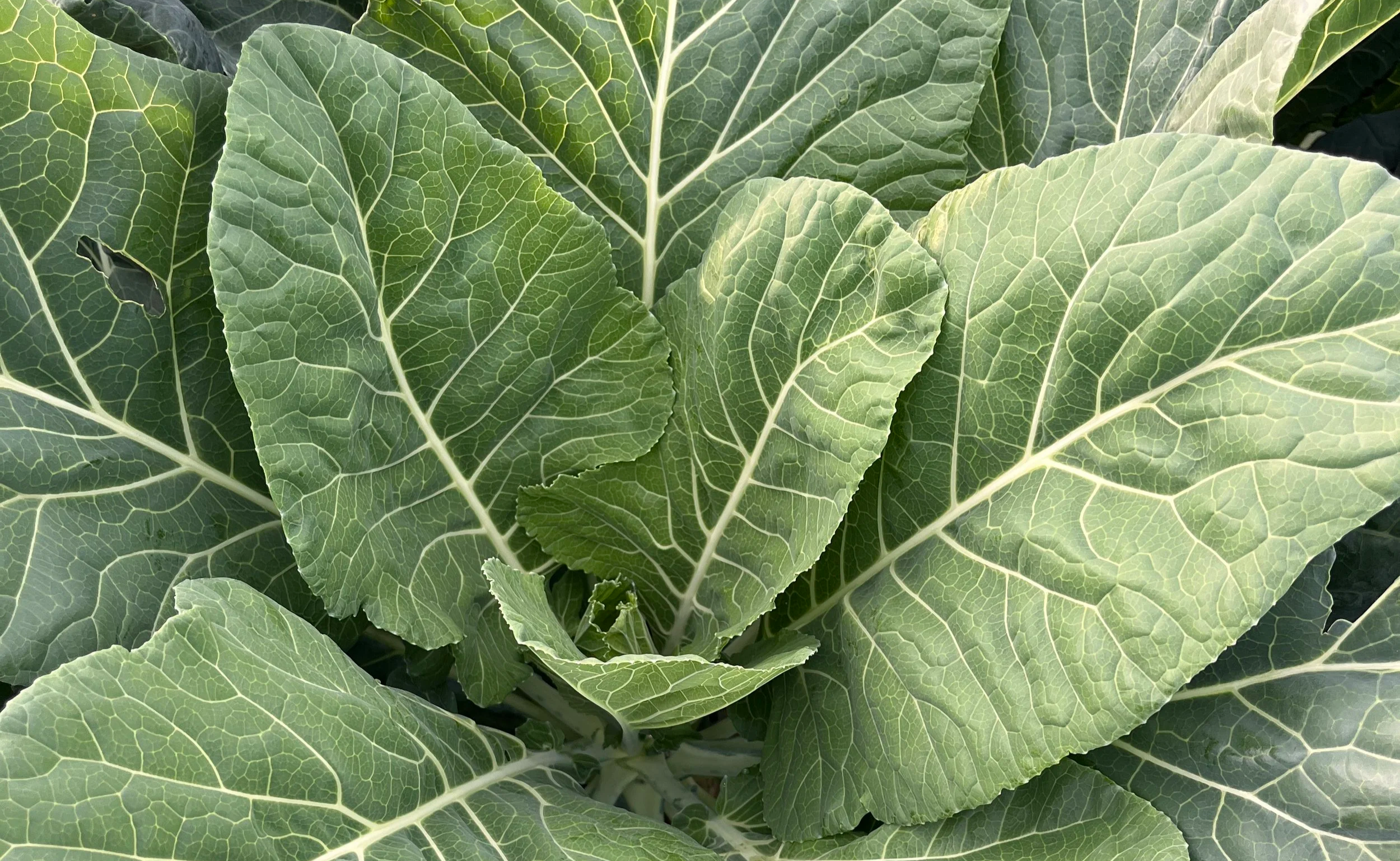
Collards are one of the South's most familiar leafy vegetables. Their broad, sturdy leaves stand up to heat, cold, and long cooking. Unlike cabbage, collards don't form a tight head. Instead, we harvest individual leaves while the plant continues growing.
Growing Collards in North Texas
Collards grow best in the cooler months of fall and spring, although established plants tolerate more heat than many other leafy greens. They prefer full sun, fertile soil, and steady moisture.
Start seeds indoors or sow directly into the garden. Give mature plants plenty of room, often 18–24 inches apart. Watch for cabbage worms and other insects attracted to the brassica family.
Harvesting
Begin picking the larger outer leaves when they're about the size of your hand or bigger. Leave the central growing point intact so new leaves continue developing.
Cool weather often improves their flavor, and established collards tolerate light freezes.
In the Kitchen
Remove tough stems from mature leaves, slice the greens into ribbons, and sauté with garlic and olive oil. Collards also work beautifully in soups, stews, and traditional slow-simmered dishes. Young tender leaves are good in wraps.
Recipe: Southern-Style Sautéed Collards
Ingredients:
1 large bunch collard greens
2 tablespoons olive oil
3 cloves garlic, minced
½ cup vegetable or chicken broth
1 tablespoon apple cider vinegar
Salt and pepper to taste
Instructions:
Wash the collards, remove the tough center stems, and slice the leaves into thin ribbons.
Heat olive oil in a large skillet. Add garlic and cook briefly until fragrant. Add the collards and broth, cover, and cook for 15–20 minutes, stirring occasionally, until tender. Finish with vinegar, salt, and pepper.
Try This at Home
Grow a few collard plants in a sunny spot during the cooler months. Harvest the outer leaves first and watch how the plants continue producing new leaves from the center. One plant provides multiple harvests over several weeks or months.
The Giving Garden at Jacob's Reward Farm
Battling Hunger. Caring for Creation.